My history of British Manufacturing

My history of British Manufacturing
Showing posts with label Lincoln Drill Hall. Show all posts

Tuesday, 17 March 2020

It takes a virus for us to come clean on the shape of the economy

In 1914 government was worried that the war would lead to unemployment. In the event the whole nation came together to produce the munitions the army needed.

In 1939, all parts of British industry met the varied and massive demands of the armed forces. 

In 2020 the economy is largely based on services and, with the coming of Covid-19, consumers are deciding that they don’t need those services and the government is advising against social contact on which many services are based. We therefore face unemployment rather than people working at full tilt. This is totally  different. In parallel with the domestic service economy, there is an economy based on the consumption of largely imported products with deliberately short lives to encourage repeat purchasing.  Will it expose the 21st century economy as a con, or can we return to an economy where we each serve each other but without the manic need for never ending consumption?

The crisis is offering an insight into the actual shape of the economy. In this article in The Guardian, Richard Partington underlines the massive significance of the hospitality industry ‘Britain’s hospitality industry contributes more than £120bn a year to the economy and is worth more than the automotive, pharmaceuticals and aeronautics industries combined. More than 3.2 million people work in pubs, restaurants and other outlets, making it the third-largest sector for employment. A further 2.8 million work in the wider supply chain. In an economy no longer dependent on people making things, we are dependent upon them buying services. When they are told not to, the knock on is dreadful. I have done some analysis of the statistics 
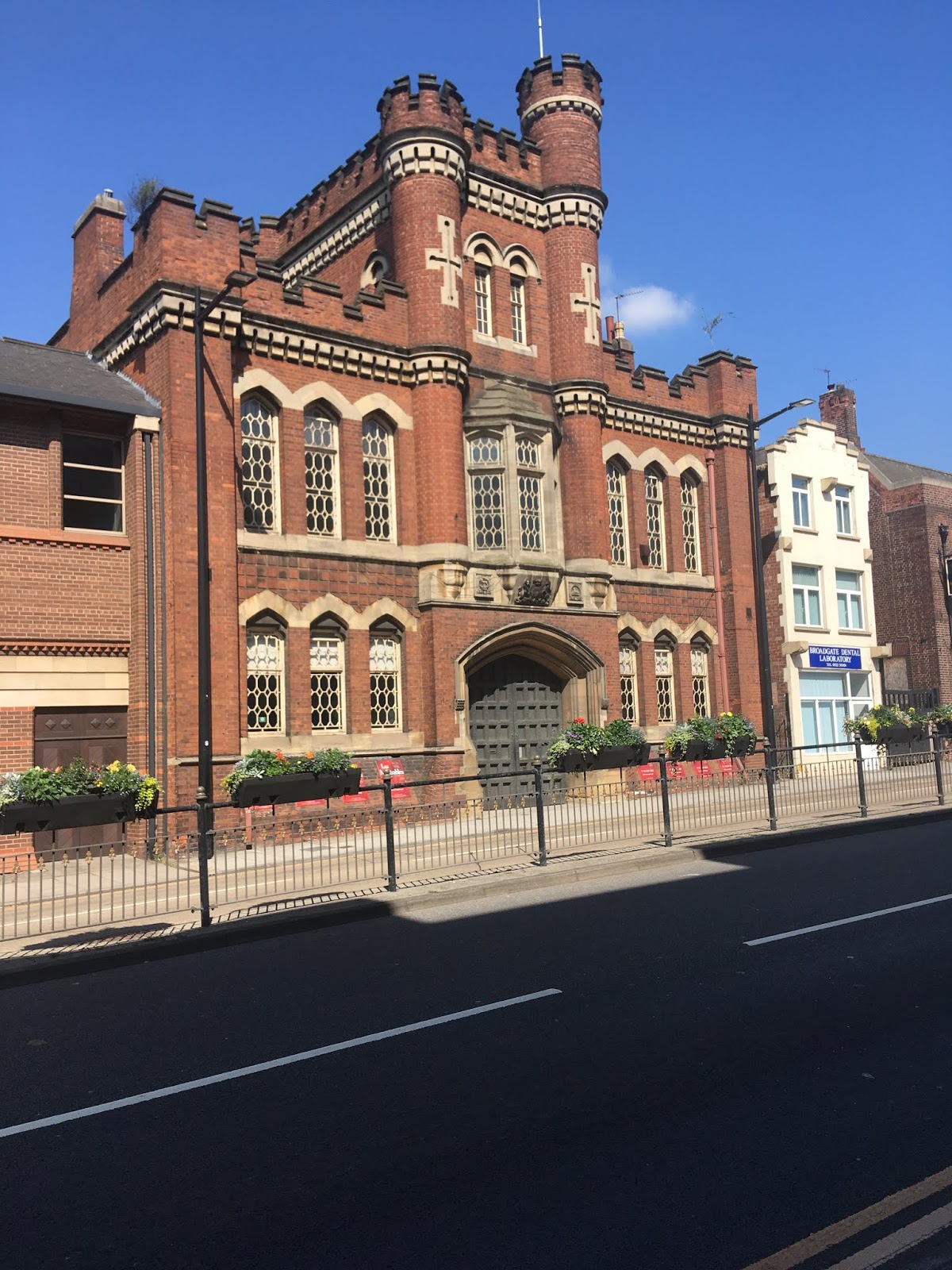


Tuesday, 7 May 2019

Employment in the 21st Century

On 18 June 2019 Lincoln Drill Hall is hosting a one day symposium presented by the University of Lincoln to explore the nature of employment in the 21st century.
The numbers of people in employment are said to be at record levels, but how much of this is full time employment, how much is capable of providing a family's income and how much is fulfilling?
The arts sector is said to be a significant contributor to the British economy, but how much employment in the arts is full time and sufficiently income providing? Very few writers earn their living from writing.
Computers and robots are said to be ready to take on a great many jobs which used to the preserve of human beings. What impact will this have on employment, and on the distribution of national income?
These are some of the big questions which the symposium and the process that will follow will seek to explore.
Follow this link to find out more and to register your interest.


Sunday, 7 April 2019

Cherish city's artscape

I take the title of the introduction I wrote for this season's Hello Lincoln. I reproduce the article below, but I want first to set out just why our city's artscape is in need of being cherished.

It is about being a city which embraces excellence in all its forms and not just a city what was notable in the past.

In order to be a place of excellence, I believe a number of factors need to be present. Excellence in education, which we have in our universities and college; excellence in work and employment, which we have in Siemens, Lindum and James Dawson but also a host of very creative businesses; excellence in architecture and heritage, which we have in abundance. It also needs excellence in the provision of arts and culture. It is simply no good if people living here have to go elsewhere to ‘feed their souls’.

I have written elsewhere of Charlotte Bronte who only found her eyes opened to art in the then new National Gallery when she visited London. In Lincoln we are amazingly lucky because, unlike Charlotte Bronte, we don’t have to go to London to have the experience she had; we have it on our door step. The Usher Gallery is surely, in its own way, as beautiful a building as the National Gallery and its setting on the hill nestling below the cathedral surely knocks Trafalgar Square for six. It has in recent years welcomed exhibitions that would make cities many times our size green with envy. It speaks of a city that is significant.

We do of course need more that just that. Many of the people of this city live in some of the most deprived wards in the UK. It is vital that our provision of art and culture reaches as far as it can and is as accessible as it can be. At the Drill Hall, we are delighted to be working in partnership with the YMCA to bring the experience of theatre to young people living in their part of the city and also to be working with the Mansions of the Future project to make art accessible in the very centre of Lincoln.

The Usher has the potential to be a massive force for good. It has been neglected and does need investment to be fit for purpose in the 21st century. The building is one with its collection, and this is important. It was built for the purpose for which it is still used and is a necessary complement to the art on display. It can speak loud and clear to the Lincoln community and to our many visitors.

The reference to visitors is important. We will soon have two wonderful heritage sites and visitors, I am sure, will come in their thousands. However, once they have visited the cathedral and castle, what next? To my mind, it is vital to have strong cultural offering to encourage those vital repeat visits.  I would argue that high quality public performance is part of this, but also the opportunity to experience great visual art in the place built to show it.

Both the Drill Hall and the Usher have a further vital role to play. They need to be places where today’s and indeed tomorrow’s artists can work. In today’s world, art cannot be something that is just ‘consumed’; there is a hunger to participate. Both places are ideally suited to this.


Saturday, 16 March 2019

What kind of a City is Lincoln?

It is a question I have asked before but in a different context; this time it is much more about whether we are a city that looks back, or one that looks now? Let me explain.

Millions of pounds have been spent at the castle, and indeed are being spent at the cathedral, to enable visitors and, of course, local residents to see what Lincoln was. All this is done in a very engaging and expert way, and that is wonderful. But is that all, and should it be all? What about the creative people of today? More to the point, what about you and me - now?

We all get on with our day to day lives, and much is far from easy. We need, from time to time, to be taken out of ourselves to experience something totally different. Here I declare my hand, I am chair of trustees at the Lincoln Arts Trust which cares for and runs Lincoln Drill Hall. So I would suggest that it is a pretty good thing to go to the Panto and have good laugh. I know, from talking to audience members, that the experience of a performance of Les Miserables or Phantom of the Opera truly lifts the spirits. It may be music; it may be comedy or theatre; it depends what is your particular cup of tea.

It is more that just live performance; it is the other ways artists speak to us. The work going on at Mansions of the Future is reaching many more people than some existing venues and that is good, but those other places can too.

As I have written elsewhere, I have come to the world of arts and culture quite late in life. I still remember the thrill of seeing paintings in an art gallery and, rather than shuffling round bored and embarrassed, having someone open my eyes to what I am seeing. I am currently writing about Charlotte Bronte, the author Jane Eyre, and have found in her letters that the same was true for her; she had her eyes opened when she visited London and the then new National Gallery.

In Lincoln we are amazingly lucky because, unlike Charlotte Bronte, we don’t have to go to London to have the experience she had; we have it on our door step. The Usher Gallery is surely in its own way as beautiful a building as the National Gallery, and its setting on the hill nestling below the cathedral surely knocks Trafalgar Square for six. It has in recent years welcomed exhibitions that would make cities many times our size green with envy.

More than this, Lincoln as city is radically different to the one I first worked in only twenty years ago. Its biggest population group by far is 18 to 25. These are young people at an incredibly important time in their lives. They already have world class universities and colleges; for their nourishment, they need access to great performance and truly engaging art. The same is true of you and me, and tragically we are at risk of losing both, for ever.

The Drill Hall is at risk of closure, which is why we are running our Buy a Brick campaign. The Usher Gallery too is as risk of ceasing to be an art gallery at all and the County Council are consulting all of us for our opinion.

With both, the question is the same: do we want to live in a city where we have on our doorstep excellent live performance and a gallery that can welcome world class art? Both need to be accessible and I know that more work is needed to achieve this. 

But, what do you think?
My article in the Lincolnshire Echo of 14 March 2019

Saturday, 9 February 2019

Be a Brick and Buy a Brick

It is true, I am not sleeping for worry about the future of the Drill Hall.

We have such an amazing team who are working tirelessly to keep this vital venue open at the heart of our city. So I was delighted to read in my Lincolnshire Echo (see below) an article written from an interview I gave on BBC Radio Lincolnshire. My delight was at the accuracy of the reporting and that fact that I had obviously said what I really wanted to say! (not always the case on a live interview).

So, what were these things I really wanted to say?

"Lincoln Drill Hall being a place for the people of Lincoln has continued for the last 130 years."

Peter Hennessy writes: Putting up prices is not an option according to Mr Hamlyn Williams. "Our purpose is to bring art and culture to the people of Lincoln, that's why we're here. We have to have tickets that are affordable - we want more and more people to come."

My predecessor as chair of trustees, Phil Cosker, puts it brilliantly in the animated video on the website. I have also written on Why it matters, on The Proms, on CompassionateLincoln Big Soup (next one 23 February), on Lincoln in WW1 and on some wonderful memories from years gone by.

That's why we are asking people to Be a Brick and Buy a Brick.


Saturday, 15 December 2018

Lincoln Drill Hall - why it matters


On the anniversary of some women first exercising their right to vote, I was privileged to see two pieces of drama Made in Lincoln

The first, The World at their Feet, I had seen before at Lincoln Drill Hall in November. This evening we saw the final scene without props or theatre lighting. Maggie and I were moved to tears, as we had been first time round. It was the combination of a story that mattered, great writing, great direction and great acting. This was a performance by a community theatre company, The Lincoln Mystery Players of a piece written and directed in Lincoln. It was so powerful. I have no doubt at all that the writer Stephen Gillard, director Sam Miles and a number of the players are heading for fulfilling careers.

The second, The Forgotten Suffragette, I am ashamed to say I didn't hear first time round when it was broadcast on BBC Radio Lincolnshire. It was acted by Phoebe Wall-Palmer and Rachel Baynton, ably supported by theatre students and the incomparable Simon Hollingsworth. This fine piece of writing was also Made in Lincoln by Proto-type Theater working with the Lincoln Performing Arts Centre. If World at her Feet moved my emotions, the Forgotten Suffragette set my mind racing.

It matters that those setting out on a career have a place to perform and hone their art. It made me think more deeply about my role as chair of the Lincoln Arts Trust, whose activity is the promotion of arts and culture principally through the care and running of Lincoln Drill Hall. It made me ask, 'what really matters?' Is it popular professional performance that plays to full houses, or do I need to dig a little deeper?

This last year I have witnessed full houses, not least the wonderful talk given to an audience ranging in age from eight to eighty by Michael Morpurgo as part of the Lincoln Book Festival and, of course, the BBCProms and the Soldier's Tale. I have also been swept away by Les Miserables performed by Jamie Marcus Productions with no cast member over the age of nineteen. I have seen new work, where we paid what we thought. I can't wait to see the Panto, also by Jamie and Julie Marcus and produced with such high performance values with actors who know their craft.
  
Yet, when I do dig deeper, I find that the Panto reaches far more people than anything else and, through it, young people have their first taste of theatre which can result in a lifelong love. Our CEO Chris Kirkwood has written further on this.

Many young people find their own skills in our Fishtank Theatre Group, now also being run at the YMCA on Tritton Road. Some take part on the New Youth Theatre who take over the Hall for a week of performances each year. We have our monthly disco run by and enjoyed by people with disabilities. Saturday lunchtime is where people come to meet and eat whilst listening to talented musicians. Three times a year, Saturday is also when Compassionate Lincoln hold their Big Soup in support of community initiatives. There is the community performances, as well as World at her Feet, pieces by Common Ground Theatre , performances by the Lincoln Symphony Orchestra and the acclaimed Lincolnshire International Chamber Music Festival with their monthly concerts at the Hall.

In truth there is so much that matters.
Michael Morpurgo with Charlie Partridge - photography by Phil Crow

Monday, 6 August 2018

The BBC Proms at Lincoln Drill Hall

"Welcome to this evening's Prom at Lincoln Drill Hall"

Never in a million years did I imagine ever saying those words, yet on the evening of 4 August 2018, I did to a full house. But why Lincoln Drill Hall?

Introducing the broadcast afternoon performance, BBC Proms Director, David Pickard, explained that it came about through serendipity. The whole Proms season was commemorating the centenary of the end of WW1, David had always wanted to perform the Stravinsky's The Soldiers Tale and, following Hull last year, wanted to find a venue outside London. Lincoln Drill Hall fitted the bill perfectly as a well regarded arts centre with a flexible performance space and with a strong military history.

Petroc Trelawny, introducing the piece, explained that Stravinsky had collaborated with CF Ramuz to produce The Soldier's Tale inspired by Russian folk tales telling of a runaway soldier who sells his violin to the devil in exchange for a book that can predict his future.

Scored for a trio of actors and seven musicians, the Hebrides Ensemble with Daisy Marwood, Laurence Guntert and Tom Dawze, enchanted the audience with stage direction by James Bonas and choreography by Cydney Uffindell-Phillips.

It was the 4th Battalion of the Lincolnshire Regiment for whom the Drill Hall was home. They were territorials, young men from a whole variety of walks of life, who came here to be available to serve King and Country. This Hall saw them drill, it saw them muster, it saw some return wounded.

In late July 1914 they were at their annual camp in Bridlington. It was there that the order came for them to return to the Drill Hall. They arrived on the morning of 4 August 1914 but were then sent home to await orders.

I am sure there was euphoria here that morning 104 years ago. Then in the afternoon there would have been silence…


Thursday, 21 June 2018

Equality?


We would love it if you could join us at Lincoln Drill Hall on Sunday 8 July at 7pm at the launch of an exhibition of work by Lincolnshire makers interpreting what one hundred years of some women getting the vote means to them. We will be joined by performance poet Gemma Baker. 


Tuesday, 8 May 2018

Compassionate Lincoln Big Soup


You are invited to join us for lunch (soup of course!) and hear pitches from local people with big ideas for making a difference in our community.

The formula is simple: 5 x 5 x 5 - Buy a £5 ticket - Hear pitches of no-more than 5 minutes in length - Dig a bit deeper with 5 questions from the audience. Once all the pitches have been made, lunch will be served and audience members can discuss the ideas they’ve heard - which one will make the most impact? which is the most exciting? which do we want to support the most? Then we vote! The winning pitch will receive all the ticket money from today’s event to turn their idea into a reality.

“When local people invest in the enthusiasm of others, making a positive difference becomes so much easier.” - Steve Kemp, CompassionateLincoln.

The Big Soup is organised by CompassionateLincoln - a campaign to encourage community-led action in response to the challenges our city faces: https://vimeo.com/171755688 

If you have a project for which you would like support please e-mail compassionatelincoln@gmail.com

The Big Soup will be held at Lincoln Drill Hall on 16 June. If you would like to come along and vote, follow this link to tickets.

Tuesday, 21 November 2017

Big Give Christmas Challenge

What does Lincoln Drill Hall mean to you?

A place for fabulous Panto?

A place for comedy or great music?

A place for provoking theatre?

The place where children and young people gain confidence through performance?

The place where people with disabilities can come and have fun?

A place when we can meet and belong?

Or, perhaps, its history?

That it was given to the city, for the use of the Lincolnshire volunteers, by the great Lincoln engineer Joseph Ruston who insisted that there should be a kitchen there to provide soup for the poor of the city?

The venue for the massively popular dances in the forties and fifties?

The place where the Rolling Stones performed before their first Top of the Pops?

You can make a big difference to help it continue to be there for the city.

The Lincoln Arts Trust has been entrusted with the running and care of Lincoln Drill Hall. This Christmas we are delighted to have been chosen as part of The Big Give Christmas Challenge (https://www.lincolndrillhall.com/big-give-christmas-challenge-2017/).

Earlier in the year, I and a number of businesses and other key supporters pledged a total of £3,750 to the campaign.  In order to unlock our pledges, the Trust needs to raise the same amount again in a one-week challenge that runs from Midday on the 28th November to Midday on the 5 December 2017.  Each pound donated in that week will unlock a pound of pledges and we are determined to raise the full £3,7500 to give us a fundraising total of £7,500.

And it doesn’t stop there.  Thanks to a generous Arts Council England scheme called Catalyst Evolve we will then be able to take that £7,500 and double it again, meaning a total fundraising income of £15,000.  In reality each pound is worth £4 to us and every penny will be invested in ensuring that we have a huge impact upon young people across the city, giving them chances to take part in the arts.  People like Scarlett who joined our youth theatre and, by the time she went to University, had programmed events on our main stage and served as a trustee:

‘Thank you so much for being such a huge part of my life and helping to make me who I am today.  From a Fishtank (youth theatre) member to a trustee, this building has helped me grow in ways I cannot even express.’

I urge you to join our campaign and to consider donating £10. This will turn into £40 and have a massive benefit for the charity as we aim to continue changing lives, changing place and changing perceptions.

https://www.lincolndrillhall.com/big-give-christmas-challenge-2017


Saturday, 28 October 2017

Frequency 2017

I'll admit it; however hard I tried I couldn't 'get' Frequency. Until this year.

A couple of years ago, I was given Arduino by my children and made some circuits to see how analogue signals could be translated into digital. It kind of worked. Talking to friends around the city though, I still found myself agreeing that it was all flashing lights and sound.

Until this year; until I saw Daz Disley's Blooms and Bloom (at Lincoln University). He had produced images of space and time from flowers. He could have done it much like cartoons used to be made. Instead he harnessed the power of Boolean logic to translate one into the other.

It is all 01, 01.

Or rather it is capturing the world as we see it in a parallel binary world of millions of tiny spots. These spots, this data whether it be of image, sound or temperature, can then be worked at will.

For me this was shown in the Empire Soldiers virtual reality piece (at the Drill Hall) which took a story from the world and, with a combination of live and virtual performance, translated it into an immersive experience which communicated in a deeply effective way the story.

There is so much more. Log Book in the cathedral; Worldless in the Drill Hall cellar. Deep Data Prototype at Posterngate reminded me of Victorian scientific instruments many, possibly most, of which were beautiful in their own right. Science and Art meets.

What is most exciting is that they now have funding for the next two festivals and so can now plan to reach even further. The Festival has been recognised by no less than the New Scientist

You can visit this year's Festival website


Monday, 18 September 2017

Lincoln Drill Hall Autumn 2017

When I called into the Hall in August this was what I found
The space had been cleared for some much needed rewiring and updating of equipment and seating for which we had obtained grant funding. There is still work to be done, but we are seriously up and running.

Over the week ending 17 September we welcomed more than 2,000 people through our doors. The Gin Festival had been a sell out as had Russell Watson and we had great comedy with Phil Jupitus. The remainder of the autumn offers yet more great performance. There are full details on the website.

In the last week of September we are hosting two events of the Lincoln Book Festival: David Starkey on 27th and Alison Weir and Sarah Gristwood and Janina Ramirez on Friday 29th. All the Festival Events are on its website.

To complete the audience experience we now have wine list comprising a range of wines so that everyone should be able to find something to their taste. I have sampled them all, in the line of duty.


Tuesday, 4 April 2017

Some more memories of Lincoln Drill Hall

Can anyone remember Len Marshall’s dance band playing at the Drill Hall?

In response to my last article, Ralph Williams told me that, as a small boy in WW2, he would sit on the stage and watch the couples navigate the crowded dance floor every Friday and Saturday night. Ralph’s grandparents were caretakers and lived in the house attached to the hall. His granddad would take great pride in keeping the dance floor shiny. His gran would serve refreshments to the thirsty dancers.

It wasn’t just Len’s band, or that of his wife, who took over the band when Len died; it was others: Ted Heath, Johnny Dankworth and Cleo Laine. Ralph spoke with special delighted of Ivy Benson’s All Girl Band, which he also managed to see later out in Egypt on his National Service.

New Year’s Eve was very special. Mrs Marshall would have dances going on not only in the Drill Hall but also in the Assembly Rooms and in a dance hall, now gone, opposite the Theatre Royal.

It wasn’t just dances. In the first floor room bordering Broadgate there was a private Men’s Club with bar and billiard table. At the other end, again upstairs, there was the Sergeant’s Mess Club also replete with billiard table.

On Boxing Day the shooting range to the right of the hall would be brought into use for a shooting competition and Ralph’s Dad, Arthur Williams who worked at Rustons in Boultham, would be a keen participant.

As musical tastes changed, so did the Drill Hall offering with the bands and performers such as Gene Vincent (with his famous hit “Be Bop A Lula”), Screaming Lord Sutch, Jess Conrad, Shane Fenton (later re-invented himself as Alvin Stardust), The Hollies and Ultravox.

There were local bands too, including the Sultans. The Hollies crossed the road after their Drill Hall gig to hear the Sultans in the old Ruston Club, aka Oddfellows Hall. Martin Phillips recalls that the Hollies complemented the Sultans on their version of Searching. Andy Blow told me another Sultans story: they were invited to support the Stones at the Drill Hall on NY Eve ’63 but felt they had to decline - they were already booked at Branston Village Hall! The Stones were a breaking band but it wasn’t yet apparent that they were going to be one of the biggest bands of all time.

In 2004 the Drill Hall re-opened with a broader remit. It was to be the performing arts venue for the city. This was not only a matter of hosting professional acts, but also being the space where local groups could perform.

There was comedy and in their early careers audiences enjoyed Lee Evans, John Bishop, Rob Brydon, Lee Mack, Jason Manford, Jack Dee, Sean Lock Sarah Millican and Stewart Lee. Still enjoyed are Marcus Brigstocke and Jeremy Hardy amongst others.

There were talks, in politics, Tony Benn and Shirley Williams but also Roy Hattersley, Michael Portillo and Ken Livingstone. Outside politics the hall has hosted Melvyn Bragg, Germaine Greer who is back this coming summer, Will Self, Gervase Phinn, Jenny Agutter and Chris Packham.

There has of course been more music. Not only did Johnny and Cleo play the Drill Hall, but their daughter Jacqui Dankworth has appeared in two Lincoln Jazz Five gigs there. Darius Brubeck, son of Dave, has been another famous jazz visitor as has Jamie Cullum of course. Georgie Fame, The Kyle Eastwood Band and Dennis Rollins.

In terms of Folk, Fairport Convention have been back each year and there have been visits from Martin and Eliza Carthy, Seth Lakeman, Bella Hardy, Lau, The Unthanks. Julie Felix was a visitor last year.

With rock and pop, audiences have enjoyed Steve Cropper, The Buzzcocks, Lloyd Cole, Midge Ure, Howard Jones and King King.

All this is before I even mention classical music, dance and theatre. Did you see Ockham’s Razor when they first came?

What are your memories of the Drill Hall?

This piece was published by The Lincolnshire Echo on 30 March 2016


Monday, 3 April 2017

John the Troubador surely must take his place among Lincoln’s Literary Heroes.

Never heard of him!

Well, read on.

On 20 May 1217 a battle took place just outside Lincoln castle between two groups of English barons: one loyal to the boy king Henry III, and the other led by Louis, son of the French king, and supported by French troops. This battle must rank alongside the Armada and the Battle of Britain in its significance to this island.

Barely two years before, a similar group of barons had confronted Henry’s father, King John, at Runnymede and had persuaded him to add his seal to a list of their demands in the document we now know as Magna Carta. This document remained in force for just ten weeks when, in response to John’s pleading, the Pope annulled it. The battle lines were re-drawn with a group of barons seeking the support of the French with the objective of overthrowing John. Another group rallied round their king.

One of these was a septuagenarian, William Marshal, whom in his younger days had been a dashing, handsome young knight beloved by those fond of jousting. William stood by his king and crucially was by his bed when John died of eating an excess of peaches, or so the story goes. John entrusted the care of his young heir to William.

The rebel barons, under Louis, controlled London and the whole of the east of England, up to and including Lincoln, but crucially not Lincoln castle which was under siege and held by Nicola de la Hay, the widow of its previous castellan.

William and his troops controlled the west. In May 1217 reports reached William that the French troops had spilt into groups and so he grabbed the chance to take them on at Lincoln and so lift the siege of the castle. They camped at Torkesey and on the morning of 20 May marched into Lincoln. A fierce battle followed and the French and the rebel barons retreated down steep hill with the English in pursuit. The English were victorious and celebrated by plundering the city of Lincoln which they accused of being in league with the rebels.

How do we know all this?

John the Troubadour wrote it in an 19,214 line poetic celebration of William Marshal’s life. John had been commissioned by William’s son and he wrote it within ten years of the battle taking place using a good number of contemporary sources. The poem, originally in medieval French, has been translated into English by Stewart Gregory and David Couch and form the basis of Crouch’s William Marshal. 

Phil Hamlyn Williams  - chair of Lincoln Book Festival, indebted to David Starkey who is speaking at this year’s festival in September 2018